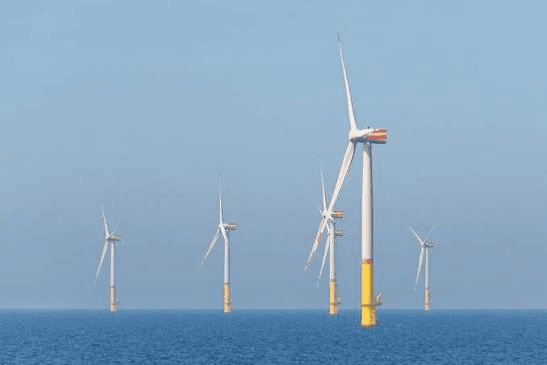
North Sea Offshore Wind Sync
Subsea high-voltage cabling and grid synchronization for a major offshore wind array.
Technical Case
Study Overview
This document summarizes the technical execution, engineering constraints, and final performance metrics for the north-sea-offshore-wind deployment, verified by VoltaEdge lead engineers.
01 / The Challenge
The primary engineering constraint involved the deployment of subsea high-voltage cabling across the technically challenging North Sea floor, where extreme maritime currents and variable seafloor topography posed significant risks to cable integrity. Additionally, the project required the seamless synchronization of variable wind power with the national grid, necessitating a solution that could handle massive fluctuations in frequency without compromising grid stability.
02 / The Solution
VoltaEdge implemented a state-of-the-art HVDC (High Voltage Direct Current) converter system that utilized VSC (Voltage Sourced Converter) technology. This allowed for precise reactive power control and black-start capability. Our team engineered custom cable protection systems using high-density polyurethane shells and integrated real-time maritime signal processing to monitor cable temperature and strain via fiber-optic sensory arrays embedded within the power lines.
03 / Key Outcomes
- 1Successful synchronization of 1.2GW of renewable energy into the national grid with 99.98% stability.
- 2Implementation of the world's first VSC-HVDC link in an extreme maritime environment.
- 3Reductions in transmission losses by 15% compared to traditional AC link alternatives.
- 4Established a 25-year predictive maintenance cycle using AI-driven fiber optic monitoring.
- 5Minimized environmental impact on local seabed ecosystems through precision deep-bore directional drilling.
- 6Achieved ISO-14001 certification for underwater infrastructure sustainability.
Advanced Engineering Protocols & Systems
Renewable Sync
Strategic synchronization of variable renewable sources into static industrial grids using VSC-HVDC.
Thermal Analysis
Advanced thermodynamic modeling to ensure cable and transformer longevity under high load.
Smart Grid Controls
SCADA-integrated automation for real-time load balancing and fault detection.
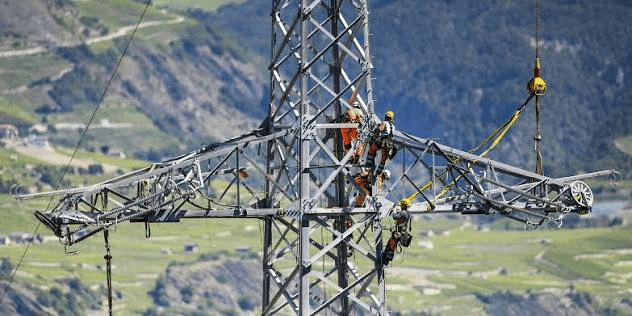
Structural Integrity
High-voltage tower and substation structural analysis for seismic and maritime resilience.
Grid Buffering
Utility-scale storage integration to mitigate renewable intermittency and frequency dip.
Digital Twin
Real-time virtual modeling for predictive maintenance and performance optimization.
Ready to architect the future?
Partner with VoltaEdge to modernize your technical infrastructure projects.